Ironclad
  • Construction Services
    • General Contracting
    • Construction Management
    • Design-Build
    • Ground-Up Construction
    • Renovations
    • Emergency Restorations
  • Industries
    • Commercial Buildings/Offices
    • Education
    • Manufacturing and Industrial
    • Healthcare
    • Hospitality
    • Government/Municipalities
  • Federal Contracting
  • Projects
    • Department of Veteran Affairs
  • About Us
    • Blog
    • Safety
    • Leadership Team
    • Areas We Serve
      • Springfield
      • Boston
      • Albany
      • Raleigh
      • Columbia
      • Manchester
      • Westhaven
    • Careers
  • Contact
  • (413) 693-1371
  • Menu Menu
  • Link to LinkedIn

How to Spot Structural Damage in Large Buildings After a Natural Disaster

When a natural disaster strikes, whether it’s a flood, fire, earthquake, or severe storm, the immediate danger may pass, but hidden threats can linger within the walls of large buildings. Structural damage isn’t always obvious, and what you can’t see could pose the greatest risk. From weakened foundations to subtle shifts in support beams, undetected damage can compromise safety, disrupt operations, and lead to costly repairs down the line. Knowing how to identify the warning signs early is essential for protecting both people and property in the aftermath of disaster.
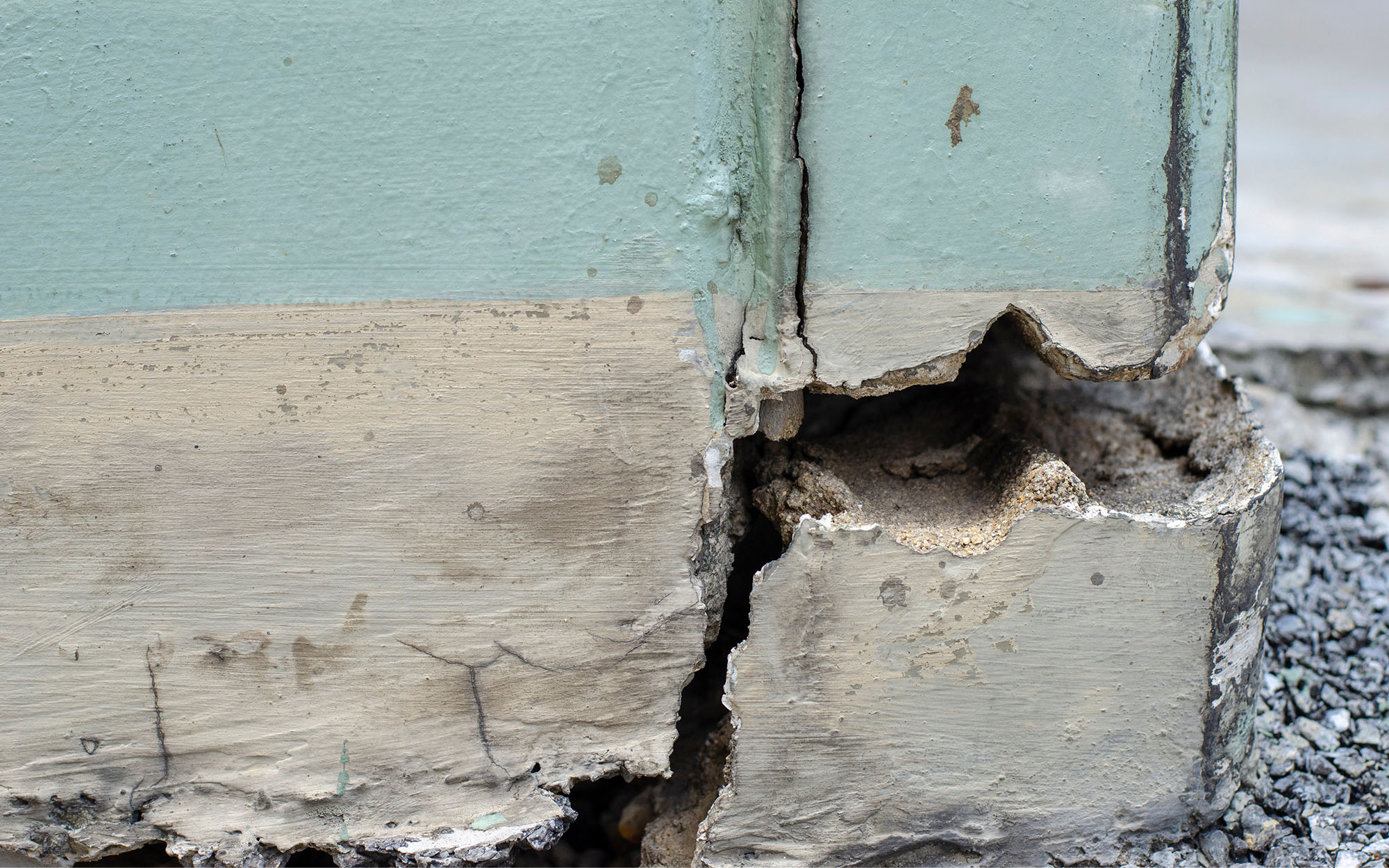
Close up Cracked concrete building or pillar cement wall

Understanding Structural Damage

Structural damage refers to any compromise in a building’s load-bearing components, including foundations, beams, columns, and walls. Such damage can result from various natural disasters, each affecting structures differently:​

  • Floods: Can weaken foundations and cause material degradation.
  • Fires: May compromise the integrity of steel and concrete elements.
  • Earthquakes: Often lead to cracks in load-bearing walls and misaligned structures.
  • Storms: Can cause roof damage and water infiltration, leading to internal structural issues.

Key Warning Signs of Structural Damage

Early detection of structural damage in large buildings is critical to maintaining safety and avoiding costly repairs.

Below are detailed indicators that facility managers and property owners should carefully monitor after a natural disaster.

Cracks Around Door Frames, Windows, and Ceilings That Suggest Foundation Shifts

After a disaster, pay close attention to cracks forming near structural stress points like doorways, window frames, and ceilings. Diagonal or stair-step patterns often indicate that the foundation has moved or settled unevenly, signaling potential structural compromise.

Doors and Windows That Suddenly Stick or No Longer Align Properly

If doors or windows that previously operated smoothly begin to jam, stick, or appear misaligned, it’s often more than a minor nuisance. These are strong indicators that the building’s frame or foundation has shifted due to structural stress.

Floors That Slope, Sag, or Feel Uneven When Walking Across Large Areas

Noticeable dips, slopes, or a general feeling of unevenness underfoot can point to weakened support beams or foundation settlement. In commercial and industrial spaces, even slight floor deviations can signal significant structural concerns.

Gaps Appearing Between Walls, Ceilings, Floors, or Where Trim No Longer Fits

Unexpected gaps where building materials once fit snugly, such as separation between walls and ceilings or trim pulling away, are signs that parts of the structure may have shifted or warped. These subtle changes often reveal deeper structural movement.

Persistent Dampness, Water Stains, or Signs of Moisture Infiltration After Flooding or Storms

Following floods or heavy storms, ongoing moisture problems, stains, or damp odors can indicate that water has infiltrated areas critical to structural integrity. Left unchecked, this can lead to material degradation, mold growth, and weakening of load-bearing elements.

The Importance of Professional Assessment

While some damage is visible, other issues may not be immediately apparent. Engaging professionals for a thorough assessment ensures all potential problems are identified and addressed.​

What Does a Professional Assessment Include?

  • Visual Inspection: Experts examine the building for visible signs of damage.
  • Structural Analysis: Evaluation of the building’s integrity, including load-bearing elements.
  • Material Testing: Assessing the condition of construction materials.
  • Foundation Evaluation: Checking for shifts or weaknesses in the foundation.​

These assessments are vital for determining the safety of the building and planning necessary repairs.​

Risks of Ignoring Structural Damage

Failing to address structural damage after a natural disaster can turn a manageable situation into a costly, dangerous crisis. While some issues may seem minor at first glance, buildings are complex systems—when one element is compromised, it can trigger a cascade of problems that threaten both safety and financial stability.

Escalating Repair Costs from Delayed Action

What starts as a small crack or slight misalignment can quickly evolve into a major structural failure if left unchecked. Delaying a professional assessment often allows minor damages to worsen over time, leading to far more extensive—and expensive—repairs than if the issue had been addressed promptly.

Increased Safety Hazards for Occupants and Visitors

A compromised structure isn’t just a financial liability; it’s a serious safety risk. Hidden damage can weaken critical load-bearing components, increasing the chances of partial collapses, falling debris, or hazardous conditions within the building. Ignoring these threats puts employees, tenants, and visitors at risk, exposing property owners to potential injury claims.

Complications With Insurance Claims and Coverage

Insurance providers typically require timely reporting and documentation of structural damage following a disaster. Failing to act quickly can jeopardize claims, reduce payout amounts, or even lead to outright denial of coverage. Without a documented professional assessment, proving that damage was disaster-related becomes significantly harder.

Legal and Regulatory Consequences

Property owners and facility managers have a legal responsibility to maintain safe premises. Overlooking structural damage can result in violations of building codes and safety regulations, potentially leading to fines, mandatory evacuations, or legal action if negligence is proven in the event of an accident.

Long-Term Operational Disruptions and Business Losses

Unresolved structural issues can cause ongoing disruptions, from areas being deemed unsafe to full building closures for emergency repairs. These interruptions can halt business operations, displace tenants, and damage reputations. In industries where uptime is critical, the financial impact of such delays can far exceed the cost of early intervention.

Learn how Ironclad provides emergency industrial restoration services to help factories and businesses recover quickly from floods, fires, and storms.

Learn More

The Role of Disaster Restoration Services in Addressing Commercial Building Damage

After a natural disaster, identifying structural damage is only the first step—what happens next is just as critical. This is where disaster restoration services play a vital role in ensuring that commercial properties are not only repaired but fully restored to safe, functional conditions. For facility managers and property owners, partnering with experienced restoration professionals can mean the difference between a swift recovery and prolonged operational setbacks.

Why Immediate Restoration Matters for Commercial Properties

Unlike residential properties, commercial building damage impacts far more than just the structure itself. It disrupts businesses, affects employees, delays services, and can lead to significant financial losses with every day that passes. Quick, coordinated action is essential to minimize downtime and prevent secondary damage, such as mold growth, material deterioration, or further structural weakening.

Professional disaster restoration services are designed to respond rapidly in these critical situations. Their expertise goes beyond basic repairs—they assess the full scope of damage, including hidden structural threats that untrained eyes might miss. From stabilizing compromised areas to coordinating with structural engineers, restoration teams ensure that safety is prioritized while developing a comprehensive recovery plan.

Comprehensive Solutions Beyond Surface Repairs

One of the common mistakes property owners make is focusing solely on cosmetic fixes after a disaster. While it may be tempting to patch visible damage and resume operations, this approach leaves buildings vulnerable to future failures. True restoration involves a deep understanding of how disasters affect structural integrity, especially in large commercial facilities where complex systems, like HVAC, electrical, and plumbing, interact with the building’s framework.

Disaster restoration specialists are trained to look beyond the surface. They work closely with engineers, inspectors, and insurers to ensure that every aspect of commercial building damage is addressed, from water infiltration weakening support beams to fire-compromised steel structures. This holistic approach not only restores the building but also safeguards its long-term resilience.

Preventing Future Risks Through Professional Restoration

Engaging professional disaster restoration services isn’t just about fixing what’s broken—it’s about fortifying the building against future risks. Many restoration teams offer guidance on structural improvements, code compliance upgrades, and preventive measures that can reduce vulnerability to future disasters.

For commercial property stakeholders, investing in expert restoration is a proactive strategy. It protects assets, ensures occupant safety, and supports business continuity. Ignoring or cutting corners in the restoration process can lead to recurring issues, higher costs down the road, and exposure to legal or insurance complications.

FAQs

How soon should I schedule a structural assessment after a disaster?

It’s advisable to arrange a professional assessment as soon as it’s safe to do so. Early evaluation helps identify and address issues promptly, reducing risks and costs.​

Can cosmetic damage indicate deeper structural problems?

Yes, superficial damages like cracks or stains can be symptoms of underlying structural issues. A professional assessment can determine the extent of the damage.​

What qualifications should I look for in a structural assessment professional?

Ensure the professional is a licensed structural engineer with experience in post-disaster evaluations. Their expertise is crucial for accurate assessments and recommendations.​

Will my insurance cover the cost of structural assessments and repairs?

Coverage varies by policy. Review your insurance details and consult with your provider to understand what’s included.​

Restore Safety and Stability With Our Emergency Restoration Services

When disaster strikes, time is your most valuable resource. The faster you act, the more you can minimize structural damage, safety risks, and financial loss. Ironclad Services is your trusted partner in navigating the aftermath of natural disasters with prompt, professional emergency restoration services tailored for commercial, industrial, and public buildings. Contact us today to schedule your restoration service.

Share This Post

  • Share on Facebook
  • Share on X
  • Share on Pinterest
  • Share on LinkedIn
  • Share on Tumblr
  • Share on Vk
  • Share on Reddit
  • Share by Mail

More Like This

scafolding on restored commercial building

Commercial Building Restoration: What Every Business Owner Needs to Know

Commercial Restoration, Emergency Restoration Services
https://www.ironcladservices.com/wp-content/uploads/2026/05/scafolding-on-restored-commercial-building.jpg 1250 2000 Abstrakt Marketing /wp-content/uploads/2022/11/IroncladlogoBW-300x74.png Abstrakt Marketing2026-05-20 16:32:522026-05-20 16:32:57Commercial Building Restoration: What Every Business Owner Needs to Know
Industrial building under construction

The Hidden Costs of Delaying Your Commercial Building Restorations

Emergency Restoration Services
https://www.ironcladservices.com/wp-content/uploads/2025/06/Industrial-building-under-construction.jpg 1250 2000 Abstrakt Marketing /wp-content/uploads/2022/11/IroncladlogoBW-300x74.png Abstrakt Marketing2025-06-09 17:18:272026-05-20 16:34:27The Hidden Costs of Delaying Your Commercial Building Restorations
Construction workers in industrial facilities

Top Challenges in Restoring Manufacturing Facilities—and How to Overcome Them

Emergency Restoration Services
https://www.ironcladservices.com/wp-content/uploads/2025/06/Construction-workers-in-industrial-facilities.jpg 1250 2000 Abstrakt Marketing /wp-content/uploads/2022/11/IroncladlogoBW-300x74.png Abstrakt Marketing2025-06-09 11:37:202025-10-02 15:23:58Top Challenges in Restoring Manufacturing Facilities—and How to Overcome Them
exterior of a modern small office building

A Guide to Commercial Building Emergency Response Plans

Emergency Restoration Services
https://www.ironcladservices.com/wp-content/uploads/2025/05/exterior-of-a-modern-small-office-building.jpg 1250 2000 Abstrakt Marketing /wp-content/uploads/2022/11/IroncladlogoBW-300x74.png Abstrakt Marketing2025-05-22 16:47:532025-05-22 16:47:57A Guide to Commercial Building Emergency Response Plans
Reviewing the Key Steps in the Commercial Building Restoration Process

Reviewing the Key Steps in the Commercial Building Restoration Process

Emergency Restoration Services
https://www.ironcladservices.com/wp-content/uploads/2025/04/Reviewing-the-Key-Steps-in-the-Commercial-Building-Restoration-Process.jpg 1250 2000 Abstrakt Marketing /wp-content/uploads/2022/11/IroncladlogoBW-300x74.png Abstrakt Marketing2025-04-28 09:24:122025-04-28 09:24:18Reviewing the Key Steps in the Commercial Building Restoration Process

Comparing Your Industrial Restoration Options: Professional Restoration Services Vs. DIY

Emergency Restoration Services
https://www.ironcladservices.com/wp-content/uploads/2025/04/Comparing-Your-Industrial-Restoration-Options.jpg 1250 2000 Abstrakt Marketing /wp-content/uploads/2022/11/IroncladlogoBW-300x74.png Abstrakt Marketing2025-04-18 08:41:142025-04-18 08:42:18Comparing Your Industrial Restoration Options: Professional Restoration Services Vs. DIY

Why Disaster Recovery Is Complicated for Large Operations

Emergency Restoration Services
https://www.ironcladservices.com/wp-content/uploads/2025/03/How-Ironclad-Provides-Emergency-Industrial-Restoration-Services-After-Disasters.jpg 1250 2000 Ike Oji /wp-content/uploads/2022/11/IroncladlogoBW-300x74.png Ike Oji2025-03-28 15:17:062025-06-06 11:34:50Why Disaster Recovery Is Complicated for Large Operations
Fire Damage Restoration: Identifying and Preventing Industrial Fire Risks

The Most Common Causes of Fire in Industrial Facilities

Emergency Restoration Services
https://www.ironcladservices.com/wp-content/uploads/2025/03/Fire-Damage-Restoration-Identifying-and-Preventing-Industrial-Fire-Risks.jpg 1250 2000 Abstrakt Marketing /wp-content/uploads/2022/11/IroncladlogoBW-300x74.png Abstrakt Marketing2025-03-27 13:31:382025-03-27 13:31:42The Most Common Causes of Fire in Industrial Facilities
Restoration Services Recovery Timeline: How Long Does It Take to Get a Business Back to Normal

How Long Does It Take to Return to Business?

Emergency Restoration Services
https://www.ironcladservices.com/wp-content/uploads/2025/03/Restoration-Services-Recovery-Timeline-How-Long-Does-It-Take-to-Get-a-Business-Back-to-Normal.jpg 1250 2000 Abstrakt Marketing /wp-content/uploads/2022/11/IroncladlogoBW-300x74.png Abstrakt Marketing2025-03-27 13:25:462025-03-27 13:26:39How Long Does It Take to Return to Business?
Previous Previous Previous Next Next Next

Categories

  • Commercial Construction
  • Commercial Restoration
  • Construction Scheduling
  • Contractor Selection
  • Damage Assessment
  • Design-Build
  • Disaster Recovery
  • Emergency Restoration Services
  • ESG
  • General Contracting
  • Masonry
  • Pre Construction
  • Regional Strategy
  • Remodel / Renovations
  • Risk Management
  • Safety
  • Uncategorized

Contact Us

"*" indicates required fields

Location

Address

1500 Main St., Suite 2004
Springfield, MA 01115


Get In Touch

Phone
413.693.1371

Email
builders@ironcladservices.com

Construction Services

General Contracting

Construction Management

Design-Build

Ground-Up

Renovations

Emergency Restorations

About Us

Ironclad Services is a full-service commercial construction contractor headquartered in Springfield, Massachusetts. We bring the same level of precision, safety, craftsmanship, and quality to private sector projects large and small as we do the federal contracting work that our reputation was built on.

Learn More
Website by Abstrakt Marketing Group ©
  • Sitemap
  • Privacy Policy
  • LinkedIn
Link to: A Guide to Commercial Building Emergency Response Plans Link to: A Guide to Commercial Building Emergency Response Plans A Guide to Commercial Building Emergency Response Plansexterior of a modern small office building Link to: Top Challenges in Restoring Manufacturing Facilities—and How to Overcome Them Link to: Top Challenges in Restoring Manufacturing Facilities—and How to Overcome Them Construction workers in industrial facilitiesTop Challenges in Restoring Manufacturing Facilities—and How to Overcome ...
Scroll to top Scroll to top Scroll to top

This site uses cookies. By continuing to browse the site, you are agreeing to our use of cookies.

AcceptLearn more

Cookie and Privacy Settings


How we use cookies

We may request cookies to be set on your device. We use cookies to let us know when you visit our websites, how you interact with us, to enrich your user experience, and to customize your relationship with our website.

Click on the different category headings to find out more. You can also change some of your preferences. Note that blocking some types of cookies may impact your experience on our websites and the services we are able to offer.

Essential Website Cookies

These cookies are strictly necessary to provide you with services available through our website and to use some of its features.

Because these cookies are strictly necessary to deliver the website, refusing them will have impact how our site functions. You always can block or delete cookies by changing your browser settings and force blocking all cookies on this website. But this will always prompt you to accept/refuse cookies when revisiting our site.

We fully respect if you want to refuse cookies but to avoid asking you again and again kindly allow us to store a cookie for that. You are free to opt out any time or opt in for other cookies to get a better experience. If you refuse cookies we will remove all set cookies in our domain.

We provide you with a list of stored cookies on your computer in our domain so you can check what we stored. Due to security reasons we are not able to show or modify cookies from other domains. You can check these in your browser security settings.

Other external services

We also use different external services like Google Webfonts, Google Maps, and external Video providers. Since these providers may collect personal data like your IP address we allow you to block them here. Please be aware that this might heavily reduce the functionality and appearance of our site. Changes will take effect once you reload the page.

Google Webfont Settings:

Google Map Settings:

Google reCaptcha Settings:

Vimeo and Youtube video embeds:

Accept settingsHide notification only