Ironclad
  • Construction Services
    • General Contracting
    • Construction Management
    • Design-Build
    • Ground-Up Construction
    • Renovations
    • Emergency Restorations
  • Industries
    • Commercial Buildings/Offices
    • Education
    • Manufacturing and Industrial
    • Healthcare
    • Hospitality
    • Government/Municipalities
  • Federal Contracting
  • Projects
    • Department of Veteran Affairs
  • About Us
    • Blog
    • Safety
    • Leadership Team
    • Areas We Serve
      • Springfield
      • Boston
      • Albany
      • Raleigh
      • Columbia
      • Manchester
      • Westhaven
    • Careers
  • Contact
  • (413) 693-1371
  • Menu Menu
  • Link to LinkedIn

The Impact of Water Damage on Public Buildings

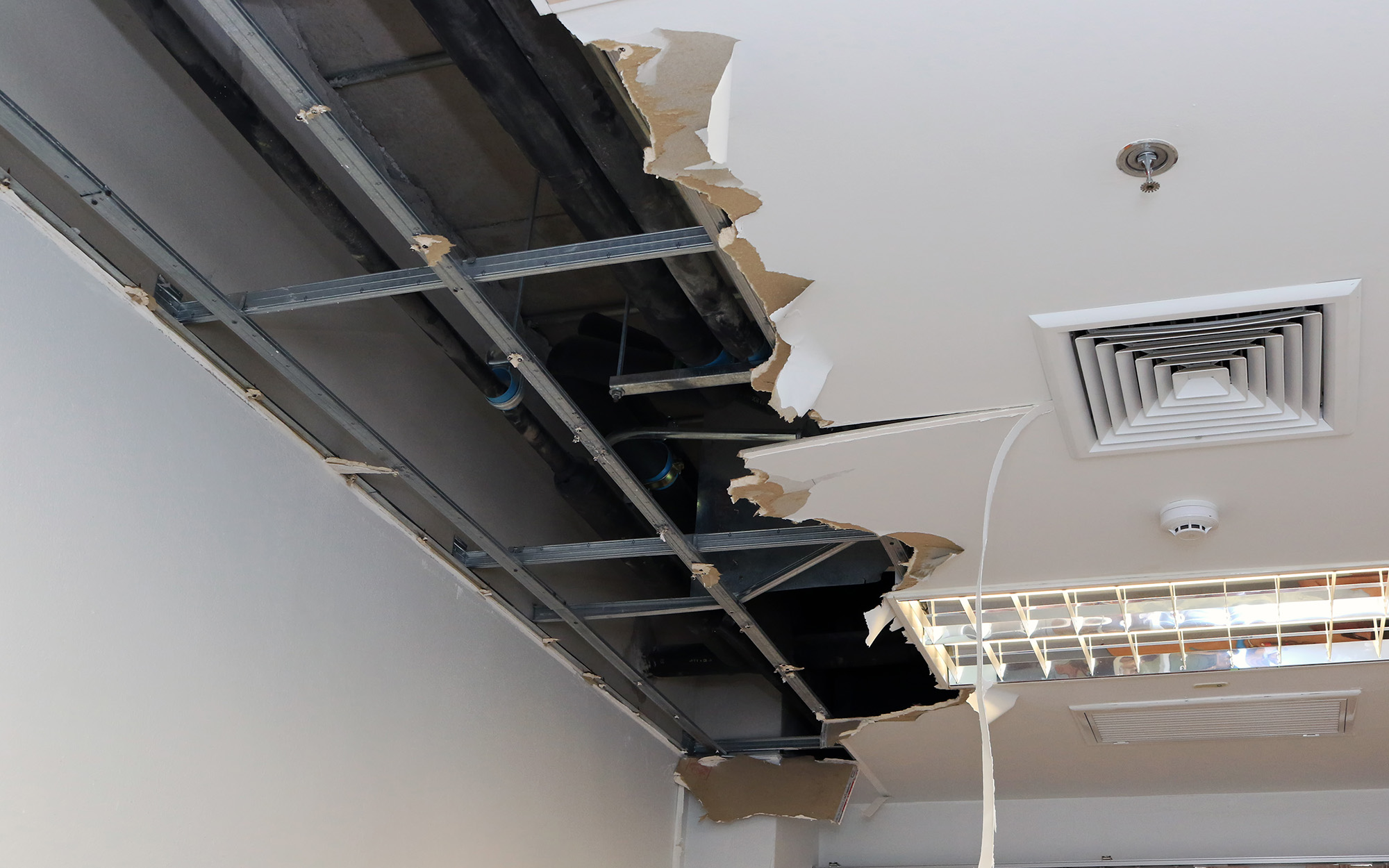
Picture this: a busy municipal office with a steady flow of visitors suddenly has a leaky pipe that floods a main hallway. The situation quickly escalates, forcing partial closures and potential hazards for everyone inside. This is just one example of how water damage can disrupt a public building. If you’re overseeing a public facility, keep reading to learn how water issues arise, why they’re risky, and what you can do to keep your building safe and functional.
Common Causes of Water Damage in Public Buildings

Public buildings often serve a constant stream of people, from community members to staff and visitors. With so much daily activity, it’s no surprise that water damage can occur in multiple ways. Below, we’ll look at some of the most frequent causes.

Plumbing and Fixture Failures

Leaking faucets, burst pipes, and malfunctioning toilets are among the top culprits for water damage. In older buildings or facilities with outdated plumbing systems, corroded pipes can give way unexpectedly. Even minor drips can escalate into major hazards if left unchecked—leading to soaked walls, ruined flooring, and, in the worst cases, mold, making mold prevention in public buildings a neccesity.

Severe Weather and Storms

Rainstorms, hurricanes, or heavy snowmelt can introduce large amounts of water in a short time. Roof leaks become a concern if maintenance has been neglected, and poor drainage can cause water to pool around a building’s foundation. Over time, repeated exposure to harsh weather weakens structures, making them more vulnerable to further damage when the next storm hits.

Structural Aging and Wear

Even well-built public buildings show signs of wear as they age. Seals around windows can fail, roofs can develop cracks, and foundations can shift. These small compromises in a building’s structure often allow moisture to seep in, causing progressive damage. For facilities that have been around for decades, routine inspections and maintenance are key to spotting trouble before it grows.

HVAC and Ventilation Issues

Heating, ventilation, and air conditioning (HVAC) systems that aren’t properly maintained can produce condensation, which leads to dampness in walls or ceilings. Blocked or poorly installed air ducts may also allow moisture buildup in hidden places. Over time, this moisture can facilitate mold growth and structural decay—especially dangerous in buildings that cater to large crowds.

Risks Associated With Water Damage

When water damage is left unchecked, the problems go well beyond annoying puddles. The potential dangers can affect both the longevity of the building and the people who use it.

Mold Growth and Air Quality Concerns

Mold thrives in damp conditions, often developing within walls, beneath floors, or in unseen crawl spaces. Mold releases spores that can trigger allergies or more serious respiratory issues, especially in schools or healthcare facilities where many occupants could be at higher risk. Poor indoor air quality can then cause headaches, fatigue, and other symptoms that disrupt day-to-day activities—and raise alarm among the community.

Structural Deterioration

Water-soaked materials like drywall, wood beams, and insulation degrade over time. If not thoroughly dried and treated, these areas weaken and compromise a building’s structural integrity. In severe cases, floors or ceilings may sag, posing obvious safety hazards for anyone who walks on or beneath them. When it comes to buildings that serve the public—like libraries or community centers—structural instability is a recipe for major liability.

Electrical and Fire Hazards

Anytime water makes contact with wiring, panels, or outlets, the risk of short circuits or sparks increases significantly. Damaged electrical systems might also remain hidden behind walls until an issue becomes urgent. Fires are not the only concern; losing power in part of a building can disrupt crucial services like lighting, security systems, and elevators. That level of downtime is especially critical for public buildings that need to be operational around the clock.

Health and Liability Issues

Safety and wellbeing are paramount in any public facility. If moisture and mold go untreated, or if the building becomes structurally unsound, you may face liability claims. In some cases, entire wings of a building might have to shut down for repairs, interrupting essential services and damaging public confidence. For schools and municipal offices, these disruptions can mean canceled classes, delayed court sessions, or reduced hours for community programs.

Solutions for Mitigating Water Damage

Given how serious the consequences of water damage can be, it’s critical to know the best ways to prevent or address it. From day-to-day maintenance to emergency response plans, there are several strategies worth exploring.

Professional Restoration and Repair

Water damage in public buildings is often more extensive than it appears on the surface. That’s why relying on qualified restoration specialists is key. Professionals use specialized tools like moisture meters and infrared cameras to detect hidden pockets of water. They also know the right drying techniques for different materials, ensuring you don’t wind up with lingering damage that leads to mold.

Moreover, swift cleanup can reduce the expense of replacing large sections of walls or flooring. Experts can salvage materials when possible, removing damaged parts and restoring structural elements. With proper restoration, you’re protecting not just the aesthetics of the building but the safety and health of everyone who uses it.

Preventative Maintenance and Routine Inspections

One of the best ways to avoid major water damage is by catching minor issues early. Schedule regular inspections to review plumbing, roofing, windows, and HVAC systems. Replace aging pipes and outdated fixtures before they break. Watch for signs like damp spots, peeling paint, or musty odors—these often point to concealed leaks or moisture buildup.

Staying on top of routine maintenance can also be more cost-effective in the long run. Fixing a small leak promptly is usually far cheaper than dealing with the aftermath of a major flood. These proactive steps help maintain the building’s longevity and keep it compliant with safety codes.

Emergency Preparedness

Sometimes, despite your best efforts, water damage in public buildings happens unexpectedly—especially in the case of severe weather events or natural disasters. Having an emergency response plan can make a huge difference in how quickly you recover. Assign responsibilities to specific team members, such as shutting off electricity or contacting a restoration crew. Keep emergency kits with tools like tarps, wet/dry vacuums, and fans inaccessible locations.

Also, ensure staff know the protocol for reporting leaks or unusual dampness. Prompt communication can mean the difference between addressing a small problem and dealing with a full-blown crisis. In public facilities, where delays can affect large numbers of people, a clear emergency plan is crucial.

Protect your public building from costly downtime and safety issues. Explore our government building solutions to discover how prompt, professional water damage restoration services can help you stay operational and worry-free.

Explore Government Construction

The Importance of a Reliable Restoration Partner

Water damage in public buildings can spiral out of control when not handled swiftly and thoroughly, which is why having a reliable restoration partner is so important. Let’s look at how this partnership benefits public buildings specifically.

Rapid Response and Expertise

Time is everything once a leak or flood occurs. A partner that’s on call and experienced in handling government and municipal buildings can help ensure minimal downtime. Their crews come equipped with the right tools and knowledge to diagnose the damage correctly, remove standing water, and dry out affected areas efficiently.

These experts also know how to navigate public-sector requirements, such as working under certain budget constraints or ensuring compliance with local codes. This targeted expertise helps you avoid delays, cost overruns, or compliance snags that might otherwise hold up your restoration process.

Collaborative Planning

Whether you’re dealing with a small, single-floor incident or a multi-building emergency, a top-tier restoration service will collaborate with you to create an action plan. This plan involves staging work in phases, potentially scheduling noisy tasks after hours or rerouting foot traffic to keep certain sections accessible to the public.

When both the restoration partner and the facility management team are aligned on goals and timelines, work is more efficient, and disruptions are minimized. This level of collaboration fosters trust and reassurance for everyone—from city officials to local residents.

Long-Term Prevention and Support

A good restoration partner doesn’t just show up to fix problems and then disappear. Many offer ongoing support and maintenance programs that keep facilities in top shape. By conducting periodic inspections, they can spot potential leaks or deterioration before they escalate into major issues. This proactive approach often includes recommending repairs or replacements for critical items like roofs, pipes, or ventilation units.

With continuous backing, you can reduce the likelihood of future emergencies while also cutting long-term expenses. Plus, you maintain a contact who knows your building’s layout and past repairs, making any unexpected problems easier to diagnose and resolve.

Reach Out Today for Expert Restorations

Don’t let water damage in your public building jeopardize your facility’s safety and reputation. Reach out today to learn how a dependable partner can help you stay prepared, keep commercial water damage restoration costs manageable, and ensure the public’s trust in the buildings they rely on most.

Share This Post

  • Share on Facebook
  • Share on X
  • Share on Pinterest
  • Share on LinkedIn
  • Share on Tumblr
  • Share on Vk
  • Share on Reddit
  • Share by Mail

More Like This

Sustainable and Strategic Building for the Future

Commercial Construction
https://www.ironcladservices.com/wp-content/uploads/2026/06/Sustainable-and-Strategic-Building-for-the-Future.jpg 1250 1994 Abstrakt Marketing /wp-content/uploads/2022/11/IroncladlogoBW-300x74.png Abstrakt Marketing2026-06-18 08:33:592026-06-18 08:34:04Sustainable and Strategic Building for the Future

Smarter Construction Planning: Permits, Quotes, and Project Management

Pre Construction
https://www.ironcladservices.com/wp-content/uploads/2026/06/Smarter-Construction-Planning.jpg 1250 2000 Abstrakt Marketing /wp-content/uploads/2022/11/IroncladlogoBW-300x74.png Abstrakt Marketing2026-06-18 08:24:082026-06-18 08:24:14Smarter Construction Planning: Permits, Quotes, and Project Management
scafolding on restored commercial building

Commercial Building Restoration: What Every Business Owner Needs to Know

Commercial Restoration, Emergency Restoration Services
https://www.ironcladservices.com/wp-content/uploads/2026/05/scafolding-on-restored-commercial-building.jpg 1250 2000 Abstrakt Marketing /wp-content/uploads/2022/11/IroncladlogoBW-300x74.png Abstrakt Marketing2026-05-20 16:32:522026-05-20 16:32:57Commercial Building Restoration: What Every Business Owner Needs to Know
Industrial and Warehouse Construction: From Site to Structure

Industrial and Warehouse Construction: From Site to Structure

Commercial Construction
https://www.ironcladservices.com/wp-content/uploads/2026/05/Industrial-and-Warehouse-Construction-From-Site-to-Structure.jpg 1250 2000 Abstrakt Marketing /wp-content/uploads/2022/11/IroncladlogoBW-300x74.png Abstrakt Marketing2026-05-20 07:52:352026-05-20 07:54:15Industrial and Warehouse Construction: From Site to Structure

When and Why Businesses Choose Commercial Renovation Projects

Remodel / Renovations
https://www.ironcladservices.com/wp-content/uploads/2026/04/When-and-Why-Businesses-Choose-Commercial-Renovation-Projects.jpg 1250 2000 Abstrakt Marketing /wp-content/uploads/2022/11/IroncladlogoBW-300x74.png Abstrakt Marketing2026-04-13 14:33:252026-04-13 14:33:30When and Why Businesses Choose Commercial Renovation Projects

A Complete Guide to Commercial Construction Projects and Their Phases

Commercial Construction
https://www.ironcladservices.com/wp-content/uploads/2026/04/A-Complete-Guide-to-Commercial-Construction-Projects-and-Their-Phases.jpg 1250 2000 Abstrakt Marketing /wp-content/uploads/2022/11/IroncladlogoBW-300x74.png Abstrakt Marketing2026-04-03 21:22:222026-04-03 21:22:27A Complete Guide to Commercial Construction Projects and Their Phases

The Top 7 Reasons Developers Prefer Design-Build Services for Commercial Projects

Commercial Construction, Design-Build
https://www.ironcladservices.com/wp-content/uploads/2026/03/Why-Developers-Prefer-Design-Build-Services.jpg 1250 2000 Abstrakt Marketing /wp-content/uploads/2022/11/IroncladlogoBW-300x74.png Abstrakt Marketing2026-03-04 16:36:102026-03-04 16:37:21The Top 7 Reasons Developers Prefer Design-Build Services for Commercial Projects

Navigating ESG Requirements in Commercial Construction

Commercial Construction, ESG
https://www.ironcladservices.com/wp-content/uploads/2025/10/Navigating-ESG-Requirements-in-Commercial-Construction.jpg 1250 2000 Abstrakt Marketing /wp-content/uploads/2022/11/IroncladlogoBW-300x74.png Abstrakt Marketing2025-10-31 09:00:222025-10-31 09:01:54Navigating ESG Requirements in Commercial Construction
Design Build Vs. Traditional Construction: Our Analysis

Design Build Vs. Traditional Construction: Our Analysis

Commercial Construction
https://www.ironcladservices.com/wp-content/uploads/2025/08/Design-Build-Vs.-Traditional-Construction-Our-Analysis.jpg 1250 2000 Abstrakt Marketing /wp-content/uploads/2022/11/IroncladlogoBW-300x74.png Abstrakt Marketing2025-08-13 15:51:432025-08-13 15:51:46Design Build Vs. Traditional Construction: Our Analysis
Previous Previous Previous Next Next Next

Categories

  • Commercial Construction
  • Commercial Restoration
  • Construction Scheduling
  • Contractor Selection
  • Damage Assessment
  • Design-Build
  • Disaster Recovery
  • Emergency Restoration Services
  • ESG
  • General Contracting
  • Masonry
  • Pre Construction
  • Regional Strategy
  • Remodel / Renovations
  • Risk Management

Contact Us

"*" indicates required fields

Location

Address

1500 Main St., Suite 2004
Springfield, MA 01115


Get In Touch

Phone
413.693.1371

Email
builders@ironcladservices.com

Construction Services

General Contracting

Construction Management

Design-Build

Ground-Up

Renovations

Emergency Restorations

About Us

Ironclad Services is a full-service commercial construction contractor headquartered in Springfield, Massachusetts. We bring the same level of precision, safety, craftsmanship, and quality to private sector projects large and small as we do the federal contracting work that our reputation was built on.

Learn More
Website by Abstrakt Marketing Group ©
  • Sitemap
  • Privacy Policy
  • LinkedIn
Link to: The Long-Term Benefits of Emergency Restoration Services Link to: The Long-Term Benefits of Emergency Restoration Services The Long-Term Benefits of Emergency Restoration ServicesReconstruction and renovation of an old half-timbered house Link to: A Guide to Choosing the Right Government Facility Restoration Service Partner Link to: A Guide to Choosing the Right Government Facility Restoration Service Partner A Guide to Choosing the Right Government Facility Restoration Service Part...
Scroll to top Scroll to top Scroll to top

This site uses cookies. By continuing to browse the site, you are agreeing to our use of cookies.

AcceptLearn more

Cookie and Privacy Settings


How we use cookies

We may request cookies to be set on your device. We use cookies to let us know when you visit our websites, how you interact with us, to enrich your user experience, and to customize your relationship with our website.

Click on the different category headings to find out more. You can also change some of your preferences. Note that blocking some types of cookies may impact your experience on our websites and the services we are able to offer.

Essential Website Cookies

These cookies are strictly necessary to provide you with services available through our website and to use some of its features.

Because these cookies are strictly necessary to deliver the website, refusing them will have impact how our site functions. You always can block or delete cookies by changing your browser settings and force blocking all cookies on this website. But this will always prompt you to accept/refuse cookies when revisiting our site.

We fully respect if you want to refuse cookies but to avoid asking you again and again kindly allow us to store a cookie for that. You are free to opt out any time or opt in for other cookies to get a better experience. If you refuse cookies we will remove all set cookies in our domain.

We provide you with a list of stored cookies on your computer in our domain so you can check what we stored. Due to security reasons we are not able to show or modify cookies from other domains. You can check these in your browser security settings.

Other external services

We also use different external services like Google Webfonts, Google Maps, and external Video providers. Since these providers may collect personal data like your IP address we allow you to block them here. Please be aware that this might heavily reduce the functionality and appearance of our site. Changes will take effect once you reload the page.

Google Webfont Settings:

Google Map Settings:

Google reCaptcha Settings:

Vimeo and Youtube video embeds:

Accept settingsHide notification only